

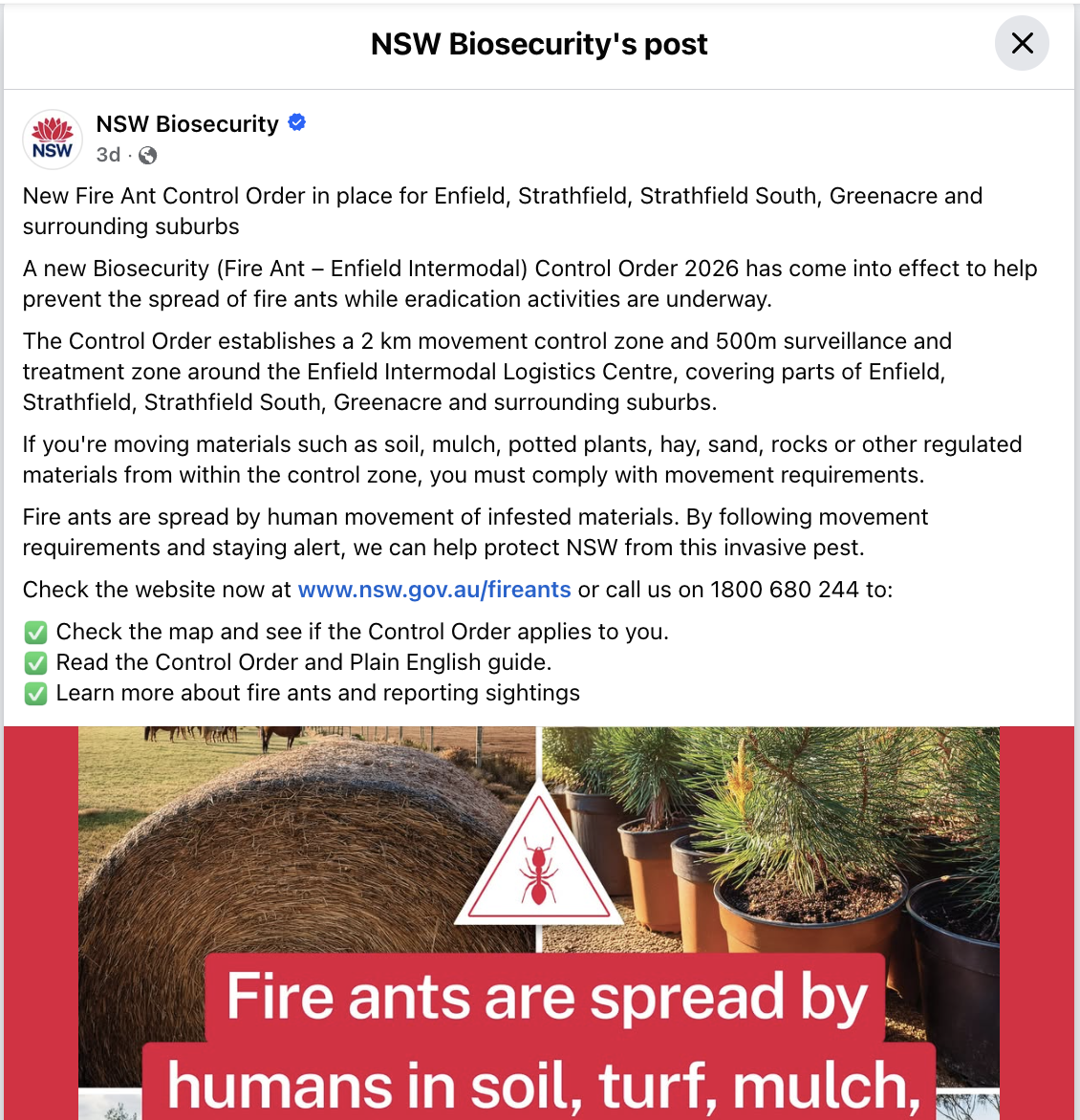
Residents and businesses across Enfield, Strathfield, Strathfield South, Greenacre and surrounding Sydney suburbs are being urged to stay alert following the introduction of new fire ant biosecurity restrictions.
The NSW Government introduced a Fire Ant Control Order on 26 October 2026 after red imported fire ants were detected at the Enfield Intermodal Logistics Centre. The original order has since been replaced by the Biosecurity (Fire Ant – Enfield Intermodal) Control Order (No. 2) 2026.
The order establishes a 2 km fire ant movement control zone, including a 500-metre treatment control zone, to help prevent these invasive pests from spreading across Sydney and other parts of NSW.
If you live, work or operate a business in the affected area, understanding the new restrictions is essential, particularly when transporting soil, mulch, plants, landscaping materials or equipment.
Why Has a Fire Ant Control Order Been Introduced in Sydney?
On 23 September 2026, red imported fire ants (Solenopsis invicta) were detected at the Enfield Intermodal Logistics Centre in Sydney's Inner West.
The discovery prompted an emergency biosecurity response from the NSW Department of Primary Industries and Regional Development (DPIRD), including surveillance, nest treatment and community awareness activities.
Fire ants are considered one of the world's most damaging invasive pest species. Unlike many common household ants, they can aggressively defend their nests, swarm in large numbers and deliver painful stings. They also pose serious risks to native wildlife, outdoor recreation, agricultural production and infrastructure.
One of the biggest concerns is their ability to spread through human activity. Soil, plants and landscaping products can carry ants or colonies into new areas without people realising. The new restrictions aim to reduce that risk while NSW authorities carry out surveillance and eradication work.
Which Sydney Suburbs Are Affected by the Fire Ant Control Zone?
The Enfield Intermodal Fire Ant Control Order covers an area extending approximately 2 kilometres from the detected nest. The control zone includes sections of:
- Enfield
- Strathfield
- Strathfield South
- Greenacre
- Chullora and surrounding areas
Not every property in these suburbs falls within the restricted zone. The restrictions depend on the property's location within the official boundary, not its suburb name alone. Check the official NSW Government map to confirm whether your address is affected.
The 2 km and 500-Metre Control Zones Explained
The NSW Government has established two important areas around the original detection site.
2 km Fire Ant Movement Control Zone
The broader 2 km zone regulates the movement of certain materials that could carry fire ants. This is particularly relevant to landscaping companies, construction businesses, nurseries, transport operators and residents relocating outdoor plants or garden materials.
Normal activities such as travelling to work, attending school, shopping or visiting friends are not restricted by the Control Order.
500-Metre Fire Ant Treatment Control Zone
The inner 500-metre area surrounds the original fire ant detection and is subject to more targeted treatment and surveillance measures. NSW authorities may undertake inspections, monitor properties and coordinate treatments to detect and eliminate fire ant colonies. Certain property owners or occupiers may also receive formal directions about surveillance or treatment.
Visit the official NSW fire ant control zone map before moving regulated materials. The NSW Government also offers a Plain English guide to the Control Order.
What Materials Are Restricted Under the Enfield Fire Ant Control Order?
Fire ants can travel unnoticed in materials commonly transported between gardens, building sites, nurseries and commercial properties. Under the new NSW fire ant restrictions, specific requirements apply when moving regulated materials from within the control zone to areas outside it.
These materials include:
- Soil and potting mixes
- Mulch, compost and manure
- Turf and potted plants
- Hay, straw, sand and certain rocks or aggregates
- Earthmoving equipment and heavy vehicles
- Shipping containers and pallets
- Green waste and building materials
The requirements vary according to the material and circumstances. Some materials must be inspected, cleaned or treated, while others must be transported under conditions designed to prevent fire ants from entering.
The Control Order does not create a blanket ban on moving all materials. However, regulated items must meet the relevant conditions before they can leave the zone. For detailed requirements, consult the NSW Government's guidance on moving products from Enfield and the current Control Order.
How to Identify Red Imported Fire Ants in Your Garden
One challenge with fire ants is that they can resemble other ant species found across Sydney. Red imported fire ants are generally between 2 and 6 mm long. Ants within the same colony can vary in size, and they typically have reddish-brown bodies with darker brown or black abdomens.
You may notice a suspicious nest before seeing the ants themselves.
Common Signs of Fire Ant Activity
Unusual soil mounds: Fire ant nests can appear as patches of loose soil or raised mounds reaching up to 40 cm high. Unlike some other ant nests, they may have no visible entrance hole.
Activity in lawns and gardens: Fire ants often establish nests in open spaces, garden beds, parks, roadsides and disturbed soil.
Large numbers of aggressive ants: Fire ants can swarm rapidly when a nest is disturbed, increasing the risk of multiple painful stings.
Ants of different sizes: Workers within a fire ant colony can vary considerably in size.
These characteristics can help you recognise suspicious activity, but they do not provide a definitive identification. If you see ants or a nest that could be fire ants, avoid disturbing them and report the sighting to NSW authorities immediately.
What Should You Do if You Find Suspected Fire Ants in Sydney?
If you discover a suspicious ant nest in Enfield, Strathfield, Greenacre or anywhere else in NSW, the most important step is to avoid disturbing it. NSW authorities recommend three actions.
Do not touch the nest, dig into it, spray it with insecticide or attempt to relocate the ants. Fire ants are classified as prohibited biosecurity matter in NSW. Keep children, pets and other people away.
If you can do so safely, take a clear photograph or video of the ants and their nest. Do not approach or disturb the nest simply to obtain a better photograph.
Report the suspected sighting immediately to NSW DPIRD. Early reporting helps authorities identify potential infestations before they spread further.
What Does the Fire Ant Control Order Mean for Local Businesses?
Businesses operating around Enfield Intermodal, Strathfield South and Greenacre should pay particular attention to the movement restrictions.
- Landscapers, gardening contractors and nurseries regularly move materials that could harbour fire ants, including soil, mulch, turf and plants.
- Construction companies may need to check the movement requirements for excavated soil, waste, machinery and equipment.
- Transport and logistics operators should review any requirements affecting vehicles, containers or regulated loads entering and leaving the control zone.
If your business moves these materials, review the current conditions before transporting them outside the restricted area. Property owners and occupiers who receive a formal surveillance or treatment notice must also follow the instructions and deadlines specified by NSW authorities.
Can You Still Book Professional Ant Pest Control in Strathfield and Enfield?
Yes. The Fire Ant Control Order does not prohibit normal pest control services for common household pests.
Suspected red imported fire ants must be reported to NSW DPIRD on 1800 680 244 rather than treated as an ordinary ant infestation. Fire ant eradication is managed through NSW biosecurity arrangements and is subject to the requirements of the Control Order. All Pest Free's licensed pest controllers are not listed under the fire ant eradication schedule, so any directed treatment of fire ants must be coordinated through NSW authorities.
For other ant species, All Pest Free's Sydney ant pest control service helps homeowners and businesses investigate ant activity and manage common infestations. Our licensed pest controllers provide pest management for residential properties, strata buildings and commercial premises across Sydney.
We also provide local pest control in Strathfield and surrounding suburbs, helping customers address everyday pest problems — including the many ant species that are common to Sydney gardens and homes but are not fire ants. For more on local restrictions, read our guide on the 2026 Enfield fire ant control order and local restrictions.
If you suspect fire ants, report the sighting to NSW DPIRD first. For routine household ant problems, you can contact All Pest Free for advice about our available services.
Frequently Asked Questions About Fire Ants in Sydney
Are fire ants currently in Sydney?
Yes. Red imported fire ants were confirmed at the Enfield Intermodal Logistics Centre in September 2026. NSW authorities have implemented surveillance, treatment and movement controls to help prevent further spread across the Inner West and broader Sydney area.
Is Strathfield inside the fire ant control zone?
Parts of Strathfield and Strathfield South fall within the 2 km Enfield Intermodal control zone. Not every address in these suburbs is affected, so residents and businesses should check the official NSW Government map to confirm their specific address.
Can I move potted plants out of the Enfield fire ant zone?
Potted plants are regulated fire ant carrier materials. Depending on their origin, storage location and other circumstances, specific treatment or movement conditions may apply. Check the current Control Order before transporting them outside the zone.
Can I treat fire ants myself?
No. If you suspect red imported fire ants, do not spray, disturb or destroy the nest yourself. Report the sighting to NSW DPIRD on 1800 680 244 and follow the department's instructions. Unauthorised treatment can interfere with eradication efforts and may be unlawful.
Are fire ants dangerous to people and pets?
Fire ants can deliver multiple painful stings and may cause serious allergic reactions in some people. Pets can also suffer painful stings and swelling. If someone develops symptoms of anaphylaxis following a sting, call 000 immediately.
How long will the Enfield Fire Ant Control Order remain in place?
The replacement Control Order states that it remains in effect until 25 April 2027, unless it is changed or revoked earlier. Residents and businesses should check the NSW Government website regularly for updates.
Stay Alert and Help Prevent Fire Ants Spreading Across Sydney
The discovery of fire ants at Enfield Intermodal highlights the importance of early detection and responsible movement of potentially infested materials. For households and businesses in Enfield, Strathfield, Strathfield South, Greenacre and nearby suburbs, staying informed is an important first step.
Check whether your property falls within the control zone, follow the relevant movement requirements and report suspicious ant activity immediately.
- NSW Department of Primary Industries and Regional Development (DPIRD), Fire Ant Maps of Infestations and Zones
- NSW DPIRD, Moving Products from Enfield Intermodal Control Zone
- NSW Government, Fire Ants in NSW — Biosecurity information and reporting
- NSW Biosecurity, Official Facebook post: New Fire Ant Control Order for Enfield, Strathfield, Strathfield South and Greenacre, October 2026
This article provides general information based on NSW Government guidance available on 30 October 2026. Always refer to the current NSW biosecurity orders for binding requirements. Information is subject to change as the biosecurity response develops.